
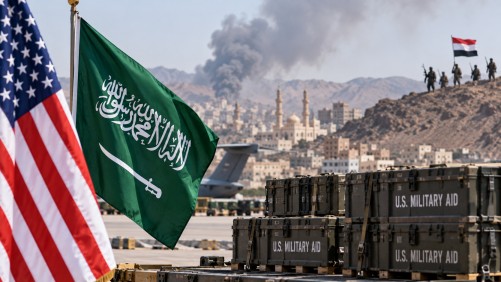
The strategic landscape of the Middle East is experiencing a shift as Houthi forces continue to consolidate their influence along Yemen’s western coast. This development has heightened concerns over the security of maritime routes through the Bab al-Mandab Strait, a critical junction in global trade connecting the Red Sea with the Gulf of Aden.
In light of these changes, the United States has opted not to extend direct military support to Saudi Arabia. This decision follows recent discussions between U.S. officials and Houthi representatives in Oman, during which the Houthis reassured the Americans that a ceasefire agreement set for 2025 remains intact. The Houthis also clarified their stance on international shipping, indicating no intent to target American or other international vessels in the Red Sea. However, vessels linked to Saudi Arabia could be targeted due to Riyadh’s involvement in the Yemen conflict.
The U.S. officials’ engagement with the Houthis marks a significant diplomatic effort to maintain stability in the region while avoiding further military entanglements. As Washington refrains from military intervention, Saudi Arabia faces mounting pressure to either engage in negotiations with the Houthis or seek additional support from neighboring countries.
Meanwhile, tensions in the region were further exacerbated by reports from Saudi Arabia of an intercepted Houthi drone near Mecca. While Saudi authorities claim the drone was thwarted before entering restricted airspace, Houthi officials have denied any involvement in targeting the holy city.
The ongoing conflict between Saudi Arabia and the Houthi forces continues to pose a threat to regional stability and the safety of commercial shipping through the Red Sea. As these dynamics unfold, the international community remains watchful of potential impacts on global trade and regional security.