
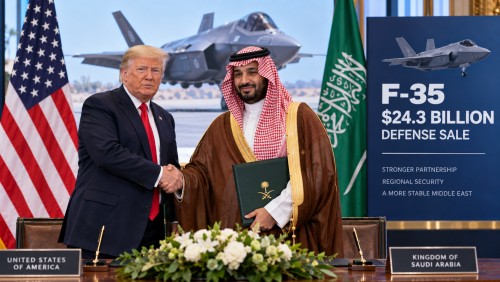
The landscape of military cooperation in the Middle East is poised for a significant shift as the United States moves forward with a major arms deal involving Saudi Arabia. The U.S. State Department has greenlit a proposed $24.3 billion sale of 48 F-35 stealth fighter jets to Riyadh, marking a notable enhancement in the military relationship between the two nations. While this development underscores the strengthening ties, the deal awaits the necessary nod from the U.S. Congress.
This potential sale is positioned as a strategic measure to bolster Saudi Arabia’s defense capabilities. According to the State Department, the acquisition of F-35s would enable the kingdom to better deter threats and improve its interoperability with U.S. military forces. The deal is presented as consistent with U.S. policy, which ensures that the military balance in the Middle East remains unaltered, particularly in maintaining Israel’s qualitative military edge.
The prospect of Saudi Arabia joining the exclusive club of F-35 operators in the region has been a long-standing ambition for Riyadh. However, Israel, which is currently the only Middle Eastern nation equipped with these advanced fighter jets, has previously expressed concerns regarding their sale to Saudi Arabia, reflecting the sensitive nature of military technology transfers in the region.
This proposed transaction is part of a broader wave of U.S. arms agreements with Saudi Arabia, which have included other significant sales, such as bombs, tank engines, and precision rocket system equipment. These deals collectively highlight the depth and scope of the military partnership between Washington and Riyadh.
However, the F-35 deal is expected to undergo rigorous scrutiny in Congress. Legislators are likely to examine issues surrounding the safeguarding of sensitive U.S. military technology, especially in light of Saudi Arabia’s expanding ties with China. The interplay of these geopolitical dynamics will be crucial as the proposal progresses through the legislative process.