
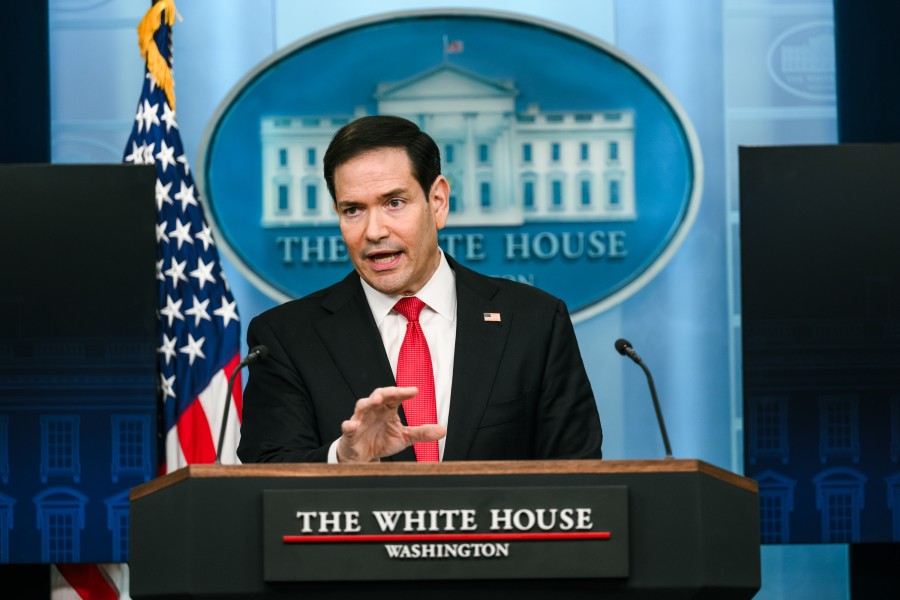
US Secretary of State Marco Rubio is currently engaged in discussions with Gulf allies regarding a proposed $300 billion fund intended for the reconstruction of Iran. However, there is apprehension among regional partners that this financial aid could inadvertently bolster Tehran’s military strength. Rubio’s itinerary includes a stop in Abu Dhabi, where talks are centered on a recent accord aimed at resolving the prolonged conflict involving the United States, Israel, and Iran.
Upon arrival, Rubio emphasized that his discussions with Gulf leaders would address lingering concerns and unresolved issues related to the agreement. The reconstruction fund has stirred significant debate among US allies, with fears that Iran might channel these resources into enhancing its defense capabilities. Additionally, Gulf nations have voiced worries that the current agreement fails to adequately tackle Iran’s ballistic missile program.
The security concerns of several Gulf countries, including the United Arab Emirates and Kuwait, have been heightened following attacks they endured during the conflict. These nations, which house vital US military installations, are seeking more robust assurances to guard against future threats. The apprehensions are particularly pronounced given the strategic importance of these facilities to US military operations in the region.
Rubio’s diplomatic efforts are part of a broader attempt by Washington to sustain backing for the agreement while simultaneously addressing the criticisms voiced by regional allies and some US lawmakers. Although Gulf leaders have supported initiatives to resolve the conflict, they remain wary of the agreement’s specifics. Ensuring the terms do not compromise regional security remains a priority for these nations as they engage in dialogue with the US.