
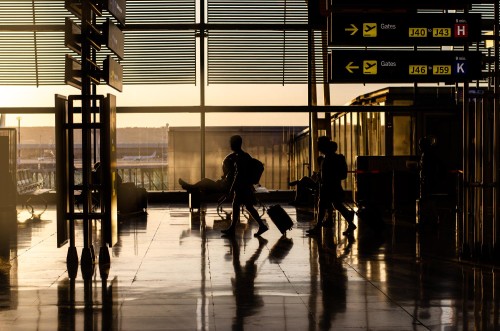
In 2025, Saudi airports experienced a significant boost in passenger traffic, with numbers rising by 9.6 percent to reach a total of 140.9 million travelers. This increase was detailed in a recent report, which highlighted that international passengers made up 75.8 million of this total, marking a 9.4 percent rise from the previous year. Meanwhile, domestic travelers reached 65.1 million, reflecting a 9.8 percent increase. This surge in passenger numbers aligns with Saudi Arabia’s Vision 2030, a strategic plan aimed at establishing the Kingdom as a central hub for global aviation and tourism. The plan has already surpassed its initial goal of attracting 100 million tourists annually and has now set a new target of 150 million by 2030.
The growth in the aviation sector comes despite significant regional challenges, particularly the ongoing conflict involving Iran, which led to airspace closures and flight cancellations throughout the Middle East. Despite these disruptions, Saudi airports successfully handled over 12.1 million passengers between February 18 and March 28, during the period of Ramadan 1 to Shawwal 9. The report notes that King Abdulaziz International Airport emerged as the busiest in the Kingdom, managing 53.5 million passengers, an increase of 9 percent from 2024. Following closely were King Khalid International Airport in Riyadh and King Fahd International Airport in Dammam, with 40.8 million and 13.7 million passengers, respectively.
During the 20th meeting of the Aviation Program Activation Steering Committee in Riyadh on May 15, GACA President Abdulaziz Al-Duailej commended the resilience of Saudi Arabia’s aviation sector. He attributed the sector’s ability to navigate recent global challenges to effective contingency planning and increased airport capacity. Al-Duailej also mentioned the Kingdom’s role in accommodating over 2,000 flights from neighboring countries, facilitating the transport of more than 258,000 passengers while ensuring smooth air traffic operations.
The report further detailed that in 2025, the total number of flights arriving and departing from Saudi airports reached 979,800, showing an 8.3 percent increase from the previous year. Domestic flights amounted to 506,300, with international flights accounting for 473,500, marking a 6.8 percent and 9.9 percent rise, respectively. The Kingdom’s international airports expanded their global reach to 66 countries, a 1.5 percent increase, while the overall number of destinations rose by 2.3 percent to 176. The Kingdom also saw a substantial growth in its aircraft fleet, which expanded by 33.8 percent to 483 aircraft, with air cargo volumes reaching 1.18 million tonnes.
In terms of airspace usage, Saudia led the airlines with a 25.5 percent share of total flights, followed by flynas and flyadeal with 13.3 percent and 8.6 percent, respectively. Despite a slight drop in its Global Air Connectivity Index ranking from 17th to 18th globally, Saudi Arabia’s efforts to enhance its aviation infrastructure and connectivity continue to position it as a formidable player in international air travel.