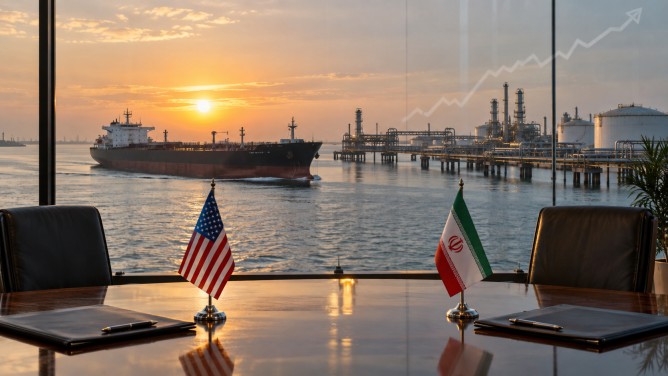
Global oil markets are poised for potential shifts as investors closely monitor developments at the United Nations General Assembly in New York. The prospect of diplomatic discussions between the United States and Iran has captured significant attention, impacting oil prices that had been declining across four straight sessions.
On Tuesday, oil prices saw an uptick with Brent crude futures for November rising by 1.7%, reaching approximately $102 per barrel. Similarly, US West Texas Intermediate (WTI) crude for October mirrored this increase, climbing to nearly $97 per barrel. The more frequently traded WTI contract for November also experienced gains, reflecting market anticipation around US-Iran talks.
The backdrop of these price movements includes ongoing geopolitical tensions in the Middle East. Key among them are the increased crude shipments through the Strait of Hormuz by Saudi Arabia, which have somewhat alleviated fears regarding global oil supply disruptions. This strategic move follows previous interruptions in the East-West pipeline, which had sparked concerns.
Adding complexity to the region’s dynamics are the activities of Yemen’s Houthi group, which is aligned with Iran. Recent attacks attributed to the group have further destabilized the situation, prompting China to call on Iran to help de-escalate tensions, particularly those affecting Saudi Arabia.
In Libya, the oil sector faces its own challenges as an armed group has reportedly shut down a valve on the Sharara crude pipeline. This action has led to a significant reduction in production at one of the country’s major oilfields, with output plummeting by around 200,000 barrels per day.
Against this backdrop, the potential for dialogue between US President Donald Trump and Iranian President Masoud Pezeshkian at the UN assembly remains a focal point for investors. Both leaders’ presence in New York has fueled speculation about diplomatic engagement, which could have broader implications for oil markets and political relations in the region.