
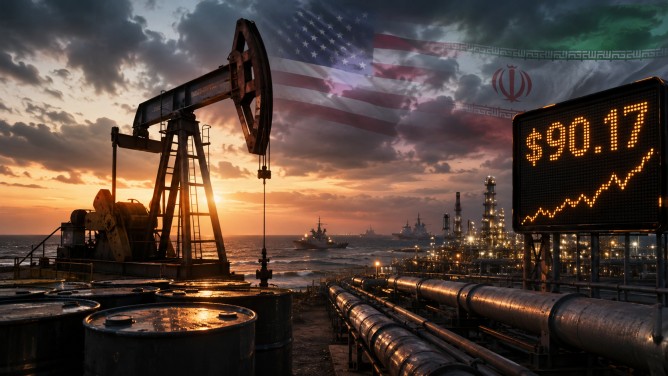
Oil prices have surged following the expiration of a two-month negotiation period between the United States and Iran, which ended without reaching a peace agreement. This development has intensified concerns about a prolonged conflict that could further impact global energy supplies. Brent crude, a major benchmark for oil prices, saw a significant rise, climbing above $90 a barrel and settling around $91.63, marking its highest point since July 30. The upward trend in prices was triggered after US President Donald Trump demanded that Iran surrender, issuing a warning about potential escalation if diplomatic efforts failed.
The situation has also cast a spotlight on the Strait of Hormuz, a vital corridor for global oil shipping. The number of commercial vessels navigating this key waterway has noticeably decreased, fueling worries about extended disruptions in oil supply chains. An incident involving an attack on a cargo vessel in the strait has heightened these concerns, raising alarms about the security of maritime transport in the region.
Iran has signaled the possibility of adopting a more assertive military posture should negotiations with the US come to a standstill. This stance, coupled with the recent attack on shipping, has led to increased apprehension about the stability of oil transportation through the Strait of Hormuz. The prospect of any extended closure or significant reduction in traffic through this crucial passage could further drive up crude oil prices.
Investors are bracing for the possibility of prolonged disruptions in oil supplies, preparing for the economic ramifications that could follow. Analysts caution that the ongoing tensions in the Middle East, in conjunction with the war in Ukraine, have the potential to create additional shocks in global energy markets. Such developments could result in a sustained increase in oil and gas prices, affecting economies worldwide.