
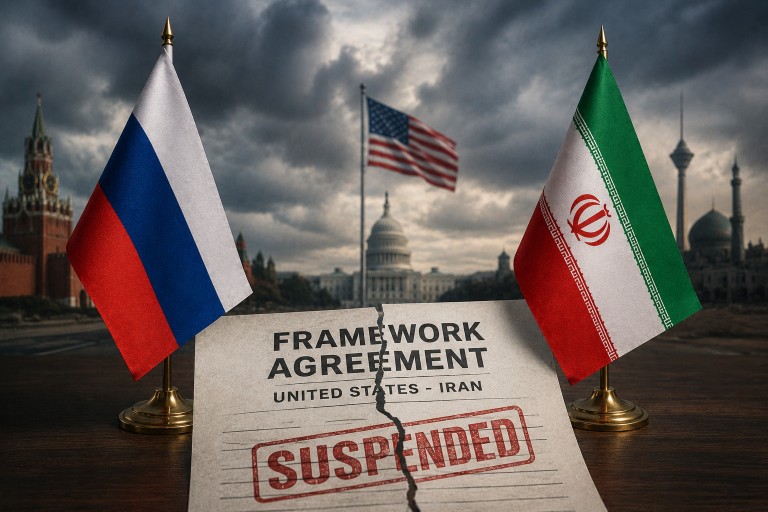
Iran recently declared its framework agreement with the United States null and void, accusing Washington of breaching the terms, as reported by Iranian authorities. The Deputy Foreign Minister, Kazem Gharibabadi, stated that Tehran has opted to suspend the agreement, focusing instead on bolstering its defense amid rising regional tensions. He further alleged that the U.S. failed to fulfill its obligations under the Islamabad declaration of intent.
This framework, established in mid-June, aimed to pave the way for lasting peace between the two nations. It included plans for negotiating a final accord within a 60-day window and featured clauses addressing the reopening of the Strait of Hormuz. The agreement was a significant step toward reducing hostilities, which had seen a temporary reprieve since early April when a ceasefire was enacted.
However, the situation deteriorated again in early July, with tensions reigniting and destabilizing the fragile truce. These renewed conflicts have significantly hampered diplomatic initiatives aimed at reconciliation. Iranian officials have indicated that due to these recent developments, they no longer consider themselves bound by the terms of the agreement.
The disintegration of this framework underscores the challenges in maintaining diplomatic progress amidst fluctuating regional dynamics. As both nations navigate these complexities, the prospect of a peaceful resolution remains uncertain, with the path forward clouded by mutual distrust and unresolved disputes.