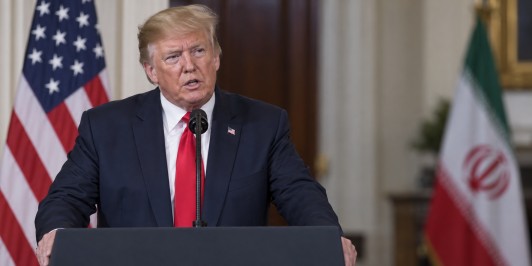
The ongoing tensions in the Middle East, particularly concerning Iran, remain a focal point of international concern as regional security and energy supplies face continued uncertainty. In this complex geopolitical landscape, U.S. President Donald Trump addressed the United Nations General Assembly in New York, highlighting the United States’ stance on Iran amidst these broader challenges.
In his speech, Trump emphasized that the United States is faced with a critical decision between negotiating a deal with Iran or pursuing further military actions. He suggested that any potential agreement could be reached following the U.S. midterm elections in November. The president defended previous military actions against Iran, reiterating the U.S. commitment to preventing Tehran from developing nuclear weapons. He expressed frustration that Iran had dismissed opportunities for negotiation, resulting in increased military tension.
Trump also urged other nations to join the United States in applying economic pressure on Iran, criticizing the Iranian government for its role in disrupting shipping through the Strait of Hormuz, a vital passage for global oil transport. Such disruptions have contributed to the broader uncertainties surrounding regional security and energy supplies.
Beyond the focus on Iran, Trump’s address included a call for member states to withdraw from the International Criminal Court, asserting that the United States would resist any international proceedings involving its military personnel. This position reflects a broader U.S. policy of skepticism towards international institutions perceived as limiting national sovereignty.
Additionally, President Trump touched on issues related to the Middle East, praising efforts towards a ceasefire and reconstruction in Gaza. These remarks were part of wider discussions at the UN General Assembly, which addressed ongoing conflicts in the Middle East and other global crises.