
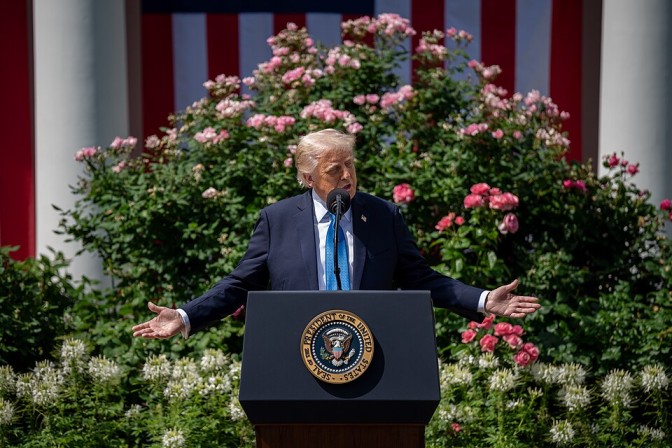
The ongoing negotiations between the United States and Iran aim to ease tensions, yet significant disagreements persist, despite some indications of headway. President Donald Trump has fluctuated between cautioning about military responses and showing hope for diplomatic resolutions, causing fluctuations in global markets. His recent remarks hinting at a possible peace agreement have contributed to a decrease in oil prices and a reduction in investor anxieties.
Current discussions are reportedly centered around a preliminary memorandum of understanding to tackle immediate concerns, including the reopening of the Strait of Hormuz, a vital channel for international energy trade. More intricate issues, particularly Iran’s nuclear program, are anticipated to be addressed in subsequent negotiation phases. One major hurdle remains economic relief. Iran is eager to access some of its frozen foreign assets before committing to significant obligations, whereas the US prefers that sanctions relief and financial incentives be tied to verifiable progress within any potential deal.
Another point of contention involves nuclear constraints. The US is advocating for more stringent commitments on uranium enrichment and nuclear scrutiny, while Iran favors more general terms, deferring detailed negotiations to future discussions. Despite these challenges, representatives from both nations acknowledge the advancements made thus far and agree that a diplomatic resolution is still feasible.
Analysts suggest that both the US and Iranian governments are under increasing pressure to avert further military conflicts and reach an agreement that could stabilize the region. As talks continue, regional security concerns, energy exports, and economic recovery remain at the forefront of negotiators’ efforts to establish a framework that could lead to a more comprehensive agreement down the line.